SEC Chair Atkins and CFTC’s Selig Launch “Project Crypto” Harmonization Push
SEC Chairman Paul S. Atkins has formally launched “Project Crypto” as a joint initiative with the Commodity Futures Trading Commission, framing the effort as a generational attempt to harmonize how the two agencies regulate crypto markets as Congress advances bipartisan market structure legislation.
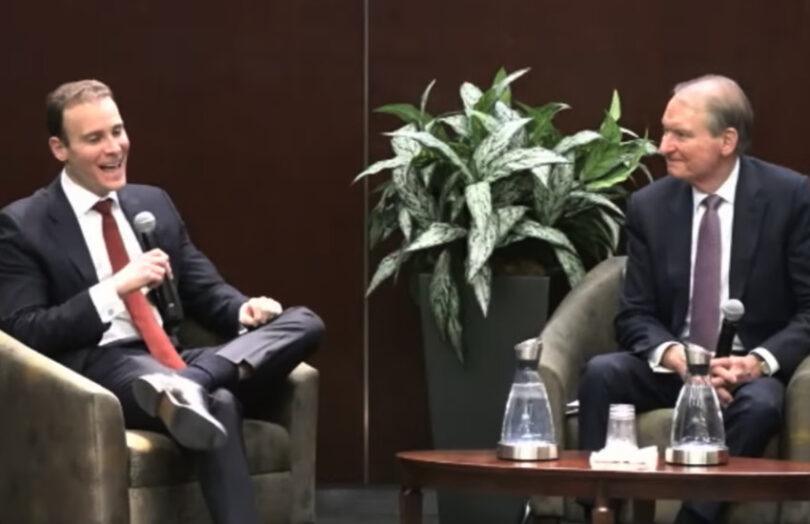
Speaking at the CFTC’s headquarters in Washington on Jan. 29, 2026, Atkins positioned the initiative as a response to both political momentum in Congress and the reality that digital asset markets increasingly blur traditional regulatory lines between securities and commodities. “As SEC Chairman, I am grateful to be a guest at the CFTC’s headquarters, standing side by side with Chairman Selig as we launch one of the most ambitious initiatives between our two agencies in a generation,” he said.
Atkins said lawmakers are “closer to sending bipartisan market structure legislation to President Trump’s desk,” but argued that legislation alone is not enough to create operational certainty for the industry. “A federal framework for markets that have surged ahead with speed and ingenuity is long overdue,” he said. “But legislation alone cannot deliver the certainty that investors and market participants deserve.”
Project Crypto Aims to End Fragmented Oversight in an Integrated Market
Atkins used his remarks to attack what he described as a legacy regulatory model that forces firms to operate across overlapping frameworks that no longer reflect how modern markets function. He argued that as crypto infrastructure becomes embedded into trading, clearing, custody and risk management, regulation must become more coordinated or risk creating confusion rather than investor protection.
“As many of you know, today’s markets do not divide neatly along regulatory lines,” Atkins said. “Trading, clearing, custody, and risk management now flow across asset classes, technologies, and platforms. So, fragmented regulation in an integrated market is not a safeguard for investors so much as a source of confusion among them.”
He framed Project Crypto as the alternative to decades of regulatory overlap. “Yet for decades, we have compelled market participants to operate within a maze of overlapping and often inconsistent regulatory frameworks that reflect historical boundaries more than modern realities,” he said. “That model is no longer sustainable.”
In a direct call for institutional cooperation, Atkins said the “turf war of years gone by must give way to a new era of cooperation.” He argued that U.S. competitiveness in capital markets now depends on regulators coordinating quickly and consistently as markets migrate to digital rails.
Takeaway
“Minimum Effective Dose” Regulation and a Pro-Innovation Posture
Atkins’s tone was explicitly pro-market, arguing that regulators should intervene only to the extent necessary to protect market integrity while allowing innovation to scale. He praised CFTC Chairman Mike Selig’s regulatory philosophy as aligned with that approach, describing it as a blend of market discipline and practical innovation awareness.
“He appreciates, as I do, that our job as regulators is to apply the minimum effective dose of regulation—no more, no less,” Atkins said. He also argued that coordination between agencies could reduce costs and uncertainty for market participants.
Atkins described the current political and regulatory environment as an inflection point, linking Project Crypto to the Trump administration’s broader financial regulatory agenda. He said regulators are “united by the common conviction that if we coordinate early, clearly, and in good faith, then we can reduce uncertainty, lower the costs of compliance, and unleash the creative energies of a free people.”
The remarks also suggest a deliberate effort to reposition crypto regulation away from enforcement-driven uncertainty and toward clearer standards. In a market where firms have historically complained about inconsistent interpretations and shifting enforcement priorities, the emphasis on “clear and principled rules of the road for crypto asset markets” signals an attempt to make compliance pathways more predictable.
Takeaway
SEC Staff Guidance and a Shift From the Previous Crypto Approach
A major portion of Atkins’s remarks was dedicated to praising Selig’s prior work at the SEC and highlighting what he called a course correction in the Commission’s crypto posture. He credited Commissioner Hester Peirce and the Crypto Task Force with improving the agency’s engagement with innovators and increasing staff guidance.
“During Chairman Selig’s time at the SEC, he played an essential role in advancing the agency’s efforts, ably led by Commissioner Hester Peirce, to course-correct the Commission’s previous approach to crypto,” Atkins said.
Atkins claimed a dramatic increase in clarity from SEC staff, suggesting a new regulatory willingness to provide interpretive guidance rather than relying on enforcement actions to define boundaries. “Last year alone, SEC staff provided more clarity on digital assets than in the prior decade combined,” he said.
He cited specific examples of that guidance, including statements on “the security status of memecoins, stablecoins, mining, and staking activities,” as well as Trading and Markets FAQs on “broker-dealer financial responsibility and transfer agent obligations.” Atkins also highlighted Investment Management guidance on custody, saying staff “made clear its staff’s view that registered advisers and regulated funds can maintain crypto assets with certain state-chartered financial institutions.”
Atkins argued these moves helped rebuild trust with the innovation community. “Even before I arrived in April, Commissioner Peirce, Chairman Selig, and their colleagues on the task force helped to restore confidence among innovators that they could engage constructively with the Commission without fear or worry,” he said.
He then tied that record to the new joint initiative, saying Project Crypto will proceed “as a joint initiative between our two agencies” as markets continue migrating on-chain.