Moody’s delivers blunt 6-word verdict on economy
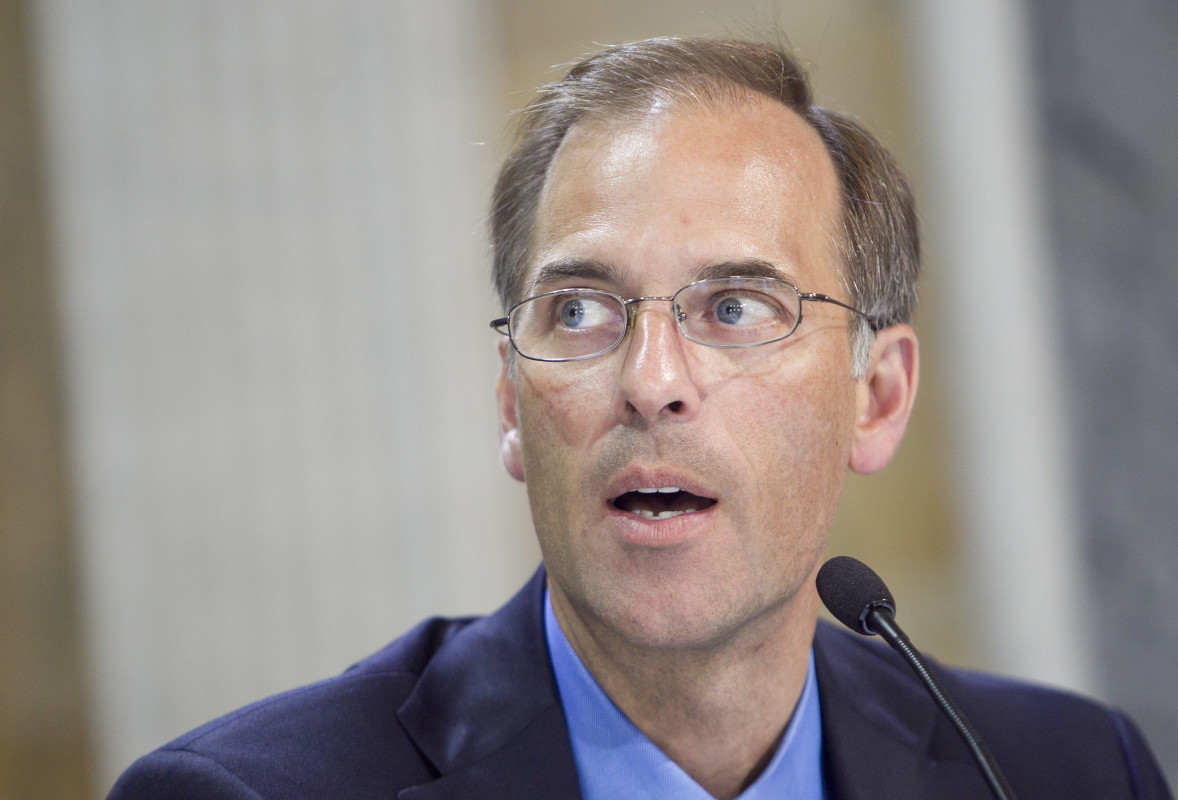
Moody’s chief economist Mark Zandi recently summed up the state of the U.S. economy.
Though he indicated that GDP “looks OK,” job growth has slowed substantially, and AI-driven productivity gains could potentially outpace job creation, he said in a Bloomberg interview.
Zandi’s point underscores a growing imbalance that makes the economy feel far more shaky. He offered six blunt words.
Though things may look relatively smooth based on aggregate output, the labor market is losing a ton of momentum.
Job creation has softened up, and hiring rates have slowed down. Simultaneously, productivity is currently running at near 2% and could jump toward 2.5% as AI spreads deeper into workflows.
Interestingly, in a recent piece I wrote, Goldman Sachs CEO David Solomon struck a more optimistic tone compared to Zandi.
Solomon said that the 2026 economy setup is “quite good,” spearheaded by catalysts including AI capex, fiscal support, and reopening deal/IPO pipes.
Moreover, Bank of America CEO Brian Moynihan echoed that same optimism from the ground level, highlighting that consumer activity is running 5% above last year.
However, if demand doesn’t rise quickly enough to effectively absorb productivity gains, unemployment levels will start to rise.
Zandi is sounding the alarm on that narrow pathway where growth is contingent on demand keeping abreast with efficiency.
Who is economist Mark Zandi?
Mark Zandi has a penchant for being early with his sharp takes on the economy, which is why investors often pay close attention.
Zandi has been in the trenches of macroeconomics for nearly 35 years, having cofounded Economy.com (an economic-data shop) in 1990, which Moody’s scooped up in 2005, bringing him into Moody’s Analytics, where he serves as chief economist.
He’s been a Washington regular, too.
MoreEconomic Analysis:
- Ernst & Young drops blunt reality check on the economy
- Federal Reserve official blasts latest interest-rate pause
- IMF drops blunt warning on US economy
Zandi has testified before Congress multiple times on the state of the economy, fiscal policy, and financial regulation. He has also advised political leaders, even serving as an economic adviser to John McCain during the 2008 campaign.
Perhaps his most prescient take was his flagging housing and credit excesses that evolved into the 2008 financial crisis.
He has been credited with highlighting the risk as early as 2005 and later calling out the runaway housing market before the eventual bust.
The mismatch between growth and jobs is the real risk to the U.S. economy
As I said earlier, Zandi’s warning emphasizes the underlying imbalance in what appears to be a relatively strong economy.
GDP growth is at roughly 2.5%, near its potential, and inflation has cooled off, too, which is why looking at aggregate output, the story seems a lot more stable.
But, as Zandi noted, it “depends on which part of the elephant you touch.”
Related: Billionaire fund manager drops $285 million in soaring tech giant
So if you touch the labor market, things get a lot trickier. The latest data help explain that growing tension.
- Payrolls: U.S. employers added 130,000 jobs in January 2026; unemployment dropped to 4.3%.
- Cooling demand: Job openings tanked to 6.5 million(Dec. 2025), the lowest since 2020.
- Productivity lift: BLS shows nonfarm labor productivity at +4.9% (annual rate) in Q3 2025; St. Louis Fed estimates that gen-AI users save 5.4% of work hours.
So clearly, the numbers don’t point to an accelerating economy.
Job creation and hiring rates have both slowed down, which matters a ton because jobs make growth feel a lot more real. When payrolls rise, households spend, and that’s what boosts confidence.
Then there’s the AI layer.
Productivity is running near 2%, and Zandi feels that the numbers could climb to 2.25% to 2.5% as AI tools spread deeper into business workflows.
Over time, those higher productivity numbers may drive higher living standards, but the short-term pain is inevitable.
Demand needs to rise sharply in absorbing the displaced workers, or we could see a steep increase in unemployment levels.
However, it’s also worth considering the flip side to the narrative about AI’s impact on jobs.
In fact, back in May last year, Indeed CEO Chris Hyams put it bluntly, as Fortune reported.
In essence, AI can automate tasks and nibble at workflows, but it’s not able to wipe out occupations end-to-end.
Related: JPMorgan builds $2.93 billion stake in health care stock
The data also back up that restraint. A new NBER-linked survey of roughly 6,000 senior executives, referenced by The Economic Times, showed that more than 90% of firms reported no meaningful employment or output impact from AI over the past three years.
“History tells us it’s actually going to happen much slower,” explained Nobel economist Daron Acemoglu, according to The Atlantic.
The housing fix will take years, not headlines
Washington’s new housing push is being praised by some pundits, but Zandi doesn’t share that optimism.
He said recent bipartisan housing legislation is encouraging, primarily because it zeroes in on the supply side of the market.
That is important because he argues that the U.S. didn’t fall into what has been a housing shortage overnight; rather, it has been developing since the financial crisis. So if it took more than a decade to get into this mess, it will likely take a lot more time to climb out.
One provision that could prove pertinent, Zandi feels, is the elimination of the “permanent chassis” requirement for manufactured housing. That, he argues, could meaningfully affect nearly 100,000 units per year, mostly serving low- and middle-income households in the South and West.
On the other hand, Zandi isn’t buying into the demand-side gimmicks.
Fifty-year mortgages, portable loans, or efforts to artificially pump demand when supply levels are tight will only push prices higher, given current demand.
And despite the fears, Zandi isn’t hoping for home prices to drop sharply. He said that two-thirds of Americans own homes, and for most of them, it’s their largest asset.
So the best-case scenario might be the least dramatic, where we see prices stall, wages jump, and affordability slowly improve.
Related: Ray Dalio’s Bridgewater invests $253 million in major AI stock