Legendary economist delivers blunt warning on inflation, tariffs
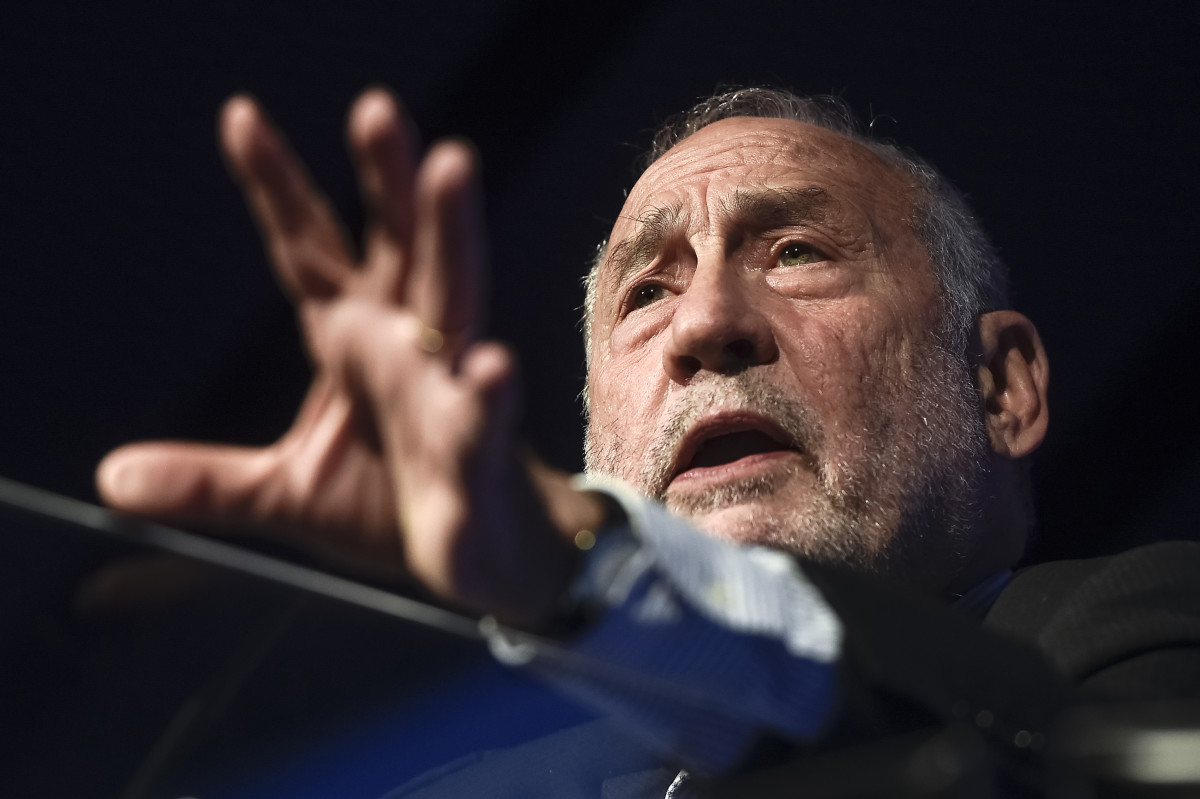
Joseph Stiglitz just dropped a stark verdict on the economy, and he isn’t sugarcoating it.
“Uh, not great right now, and the prospects are that it’s going to get worse,” he said during a recent CNBC interview.
What concerned him more was the policy framework, especially tariffs.
Stiglitz argued that the inflationdebate misses the real story, as most people focus on the theatrics rather than the subtle but damaging impact it is already having.
Higher import costs continued to filter through supply chains, while everyone wondered why prices didn’t explode.
At the core of his take is that when costs rise, prices usually follow. The effect may not be instant, but eventually things catch up.
He also dismissed claims of tariffs as a clean revenue tool, arguing they’ve delivered none of what was promised.
Over the past week, I’ve covered a couple of other bold takes on the economy, and they stand in contrast to what Stiglitz is arguing.
Treasury Secretary Scott Bessent continues leaning hard on resilience and upside, making the case for an economic turnaround once shutdown distortions fade and AI capex starts to build. Veteran Moody’s economist Mark Zandi is a lot more cautious, stating that productivity could outpace job growth, laying the foundations for a shaky economy.
Stiglitz goes a step further, framing macro tools such as tariffs and policy credibility as major structural drags that are weakening the economy in ways we may not realize.
Who is Joseph Stiglitz?
Joseph Stiglitz is perhaps one of the rare economists who has played on both sides of the field.
Unlike most economic commentators, Stiglitz has been both a top-tier academic and power player in global policy. His illustrious career dates back to 1967, when he earned an MIT Ph.D., and since then, he has been shaping debates for more than five decades.
Moreover, he won the 2001 Nobel Prize in Economic Sciences for his work on analyzing markets with “asymmetric information.” Put simply, why do markets tend to misfire when one side knows a lot more than the other?
MoreEconomic Analysis:
- Ernst & Young drops blunt reality check on the economy
- Federal Reserve official blasts latest interest-rate pause
- IMF drops blunt warning on US economy
Even before that, he was awarded the John Bates Clark Medal by the American Economic Association (1979), a massive honor that came pretty early in his career.
A big part of Stiglitz’s working life was spent inside the machine, having served as chair of President Bill Clinton’s Council of Economic Advisers and later as the World Bank’s senior vice president and chief economist.
He’s currently chief economist and a senior fellow at the Roosevelt Institute, where his pertinent work focuses on inequality, corporate power, and macro policy.
On top of that, he is a bestselling author with nearly three dozen books under his belt, including “Globalization and Its Discontents and The Price of Inequality,” as well as hundreds of technical papers.
U.S. inflation trend: CPI-U annual average changes (2020-2025)
- 2020: +1.2%
- 2021: +4.7%
- 2022: +8.0%
- 2023: +4.1%
- 2024: +2.9%
- 2025: +2.6%
Source: Federal Reserve Bank of Minneapolis (Inflation Calculator/CPI data)
Latest monthly inflation (CPI-U):
- January 2026: +2.4% year over year; +0.2% month over month (seasonally adjusted)
- December 2025: +2.7% year over year (core CPI +2.6%)
Source: U.S. Bureau of Labor Statistics (Consumer Price Index)
The hidden cost of tariffs, according to Stiglitz
Stiglitz argues that the effects of tariffs were not as dramatic as many had hoped, but the damage was subtler and perhaps more lasting.
He said that inflation numbers were already on a downward trajectory from their pandemic and Ukraine-driven highs. Case in point: By August 2025, CPI numbers had cooled to around 2.9%, according to CNBC.
However, Stiglitz points to a policy paradox.
Related: Cathie Wood buys $3.5 million in Nvidia-backed stock ahead of earnings
To judge tariffs more effectively, he says it’s imperative to look at what would have happened without them. And that’s exactly where the numbers get a lot more interesting.
A popular National Bureau of Economic Research paper published in November 2025 estimated that 2025 tariffs added nearly 0.7 percentage points to CPI within just six months.
So, in other words, that 2.9% inflation reading in August 2025 might have actually been closer to 2.2% without tariffs.
Then there’s the household impact to consider.
According to The Tax Foundation, tariffs cost the average American household roughly $1,000 in 2025, potentially jumping to $1,300 in 2026 if they were to remain in place.
On top of that, a popular New York Fed Liberty Street Economics analysis found that roughly 90% of the tariff cost fell on U.S. firms and consumers, not foreign exporters, with average tariff rates spiking from 2.6% to roughly 13% in 2025.
So, Stiglitz is pointing to simple economics.
Higher costs, fewer jobs, weaker institutions
The obvious increase in costs is one thing, but Stiglitz feels tariffs fell short of their own goals, too.
The veteran economist said that tariffs were “okay” as a way to boost sales, but, like a tax, he flatly rejected the idea.
His first complaint about tariffs is about distribution.
According to him, tariffs are “regressive,” as they tend to fall hardest on goods, and lower-income households usually spend a much higher share of their income on goods, especially necessities.
Related: Morgan Stanley resets Nvidia stock forecast ahead of earnings
On top of that, he argues that tariffs tend to be “distortive.”
They raise revenues, but they also warp supply chains and business decision-making. Companies have to shift sourcing just because it’s taxed differently, creating a ton of friction.
Stiglizts also went after the core promise of stronger job growth.
According to him, manufacturing jobs have taken a noticeable hit over the past year. Moreover, blue-collar job declines have been even larger, with job growth mostly concentrated in health care, a sector that’s unrelated to trade policy.
The data back up Stiglitz’s claims.
- Manufacturing jobs (down year-over-year): Manufacturing payrolls came in at 12.590 million in Jan. 2026, down from 12.673 million in Jan. 2025, a drop of 83,000 jobs.
- Blue-collar jobs take a bigger hit: Production and nonsupervisory employment in transportation and warehousing dropped to 5.77 million in Jan. 2026 from 5.87 million in Jan. 2025 (plummeting by 101,500 jobs).
- Job growth in health care: Health care and social assistance employment increased by 23.72 million in Jan. 2026 from 22.96 million a year earlier (up 757,700 jobs).
Source: U.S. Bureau of Labor Statistics
He also took aim at institutions.
In particular, he feels that the Trump Council of Economic Advisers “squandered” credibility and fears for the Fed’s credibility.
In addition, he argues that the “fanciful” claims over AI-driven productivity leading to lower interest rates in the not-so-distant future aren’t grounded in serious macroeconomic evidence.
Those worries are similar to those discussed by IMF economist Pierre-Olivier Gourinchas in my coverage last month, doubling down on the critical importance of central bank independence.
Related: Billionaire fund manager drops $2.8 billion on Big Tech stocks