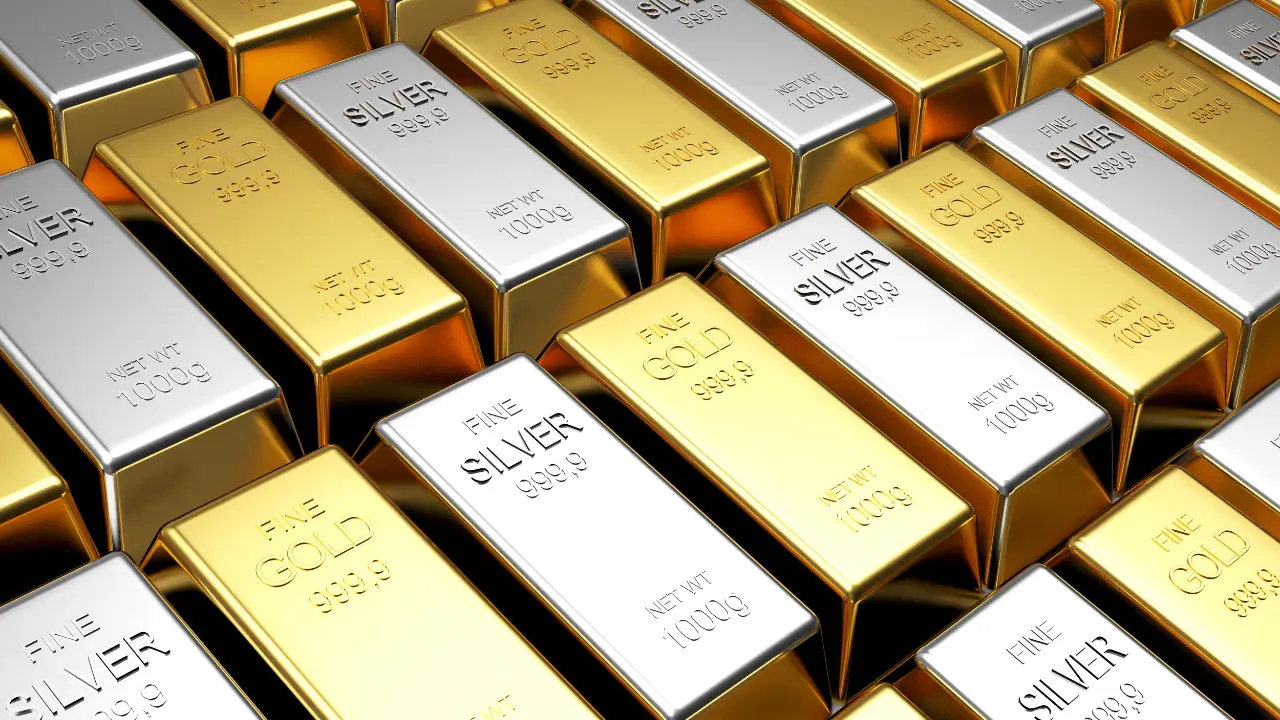
Gold and Silver Shatter Records as Global Economic Uncertainty Drives Safe Haven Demand
The precious metals market witnessed an extraordinary surge on January 26, 2026, as both gold and silver prices rocketed to fresh all-time highs amidst a perfect storm of geopolitical tension and fiscal instability. Spot gold broke through the psychologically significant 5,000 dollar per ounce barrier for the first time in history, reaching an intraday peak of 5,110.50 dollars. This historic milestone follows a period of “chaotic policy proclamations” from Washington D.C., including renewed threats of 100% tariffs against Canada and a diplomatic showdown over the status of Greenland. As investors scramble for “insurance” against the potential for another U.S. government shutdown, the yellow metal has emerged as the ultimate anti-fragility asset, surging nearly 90% since early 2025. This move is being further supported by a weakening U.S. dollar and a sustained accumulation trend from central banks, particularly those in the “Global South” who are seeking to reduce their reliance on the traditional G10 currency space and secure their national reserves with tangible, non-sovereign wealth.
Silver Outperformance and the Industrial Demand Spike from AI Infrastructure
While gold’s rally captured the mainstream headlines, silver has proven to be the “offensive” leader of the precious metals pack, touching a new record high of 112.38 dollars an ounce. The white metal’s 53% year-to-date gain is being driven by a unique convergence of its traditional monetary role and its essential utility in the “AI-Industrial Complex.” The massive expansion of global data centers and renewable energy projects has created a structural supply deficit, as silver remains a critical component in the high-performance circuitry required for advanced computing and solar technology. Analysts at Bank of America note that the gold-silver ratio has collapsed to levels not seen since 2011, reflecting a market where industrial scarcity is now overriding historical valuation metrics. This “super-cycle” in silver is also being fueled by a resurgence in retail investment demand, as younger generations view silver as a more accessible entry point into the hard-asset market compared to the now-exorbitant price of gold.
Geopolitical Insurance and the Erosion of Trust in the Fiat Reserve System
The current rally in bullion is widely interpreted as a broader rejection of the legacy financial system’s ability to maintain stability in a multipolar world. Industry analysts at Anand Rathi have observed that gold is no longer behaving as a cyclical inflation hedge but as a form of “geopolitical insurance” against the weaponization of trade and financial sanctions. With national deficits expanding and real interest rates remaining compressed in many major economies, the “opportunity cost” of holding non-yielding metals has effectively disappeared. Furthermore, the recent announcement by Japan’s government regarding radical tax-cut pledges has further spooked global money markets, leading to a flight from fiat currencies toward assets with no counterparty risk. As Goldman Sachs raises its December 2026 gold price target to 5,400 dollars, the sentiment across the trading floors is one of cautious persistence. For many, the breach of the 5,000 dollar level represents a permanent “reset” in the global monetary order, where the security of physical assets is once again prioritized over the promises of centralized institutions.