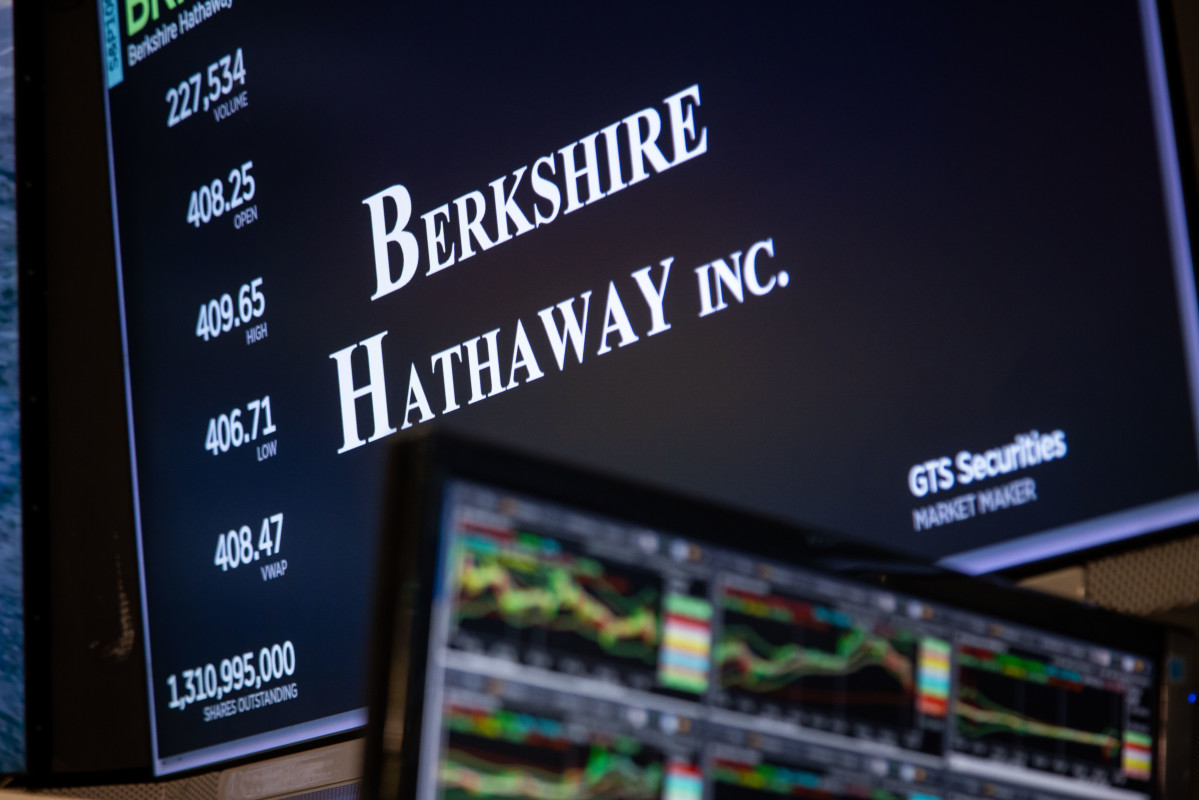
Buffett’s Berkshire mixes a newspaper bet with a favorite pizza chain
Berkshire Hathaway has quietly walked back into a business Warren Buffett publicly exited just a few years ago.
As the Buffett era wound down, Berkshire built a new position in The New York Times Co. in the quarter that ended Dec. 31, according to a securities filing released late Tuesday, MarketWatch reported.
Berkshire bought more than 5 million New York Times shares, worth about $370 million at Tuesday, Feb. 17’s close, effectively returning to the newspaper world six years after selling its BH Media Group papers and the Buffalo News to Lee Enterprises.
In premarket trading on Wednesday, Feb. 18, New York Times stock rose about 2%, moving toward a second straight record close and extending a seven‑session winning streak, MarketWatch reported. Berkshire’s move is striking, given how much of the newspaper industry has been written off by investors, and it echoes Buffett’s longstanding preference for brands that can charge for trust and habit rather than novelty.
I read this as Berkshire deciding there is room in its portfolio for a digital‑first newspaper franchise with subscription pricing power, even after formally walking away from owning local papers outright.
Why Berkshire’s New York Times buy fits a Buffett mold
On the surface, buying a newspaper in 2026 sounds like a throwback. Dig into the fundamentals and it looks more like a bet on a subscription software company wrapped in a news brand.
Berkshire’s fresh investment in The New York Times marks a return to a sector it left in 2020, but this time it picked a publisher that has diversified well beyond print, MarketWatch noted. The Times has turned itself into a global digital subscription business, with revenue coming from core news, games, cooking, audio, and other verticals that tuck neatly inside a single bundle.
Related: Buffett’s Berkshire quietly unloads a big name just as Al spending soars
Another breakdown of the 13F from Investing.com pointed out that Berkshire’s new stake in the Times sits alongside longtime positions in brands such as American Express and Coca‑Cola, suggesting that Greg Abel and the Berkshire team see the paper as a durable brand with pricing power and recurring revenue.
That aligns with how Buffett has talked about newspapers over the years. He long argued that high‑quality local or niche titles could still be great businesses if they retained a quasi‑monopoly on information people actually need, but he walked away from owning a broad portfolio of dailies when print economics collapsed.
Berkshire sold BH Media Group and the Buffalo News to Lee Enterprises for about $140 million in 2020, closing out that chapter.
This New York Times stake looks more like a focused brand bet than a nostalgia play: one premium title, with global reach and proven digital pricing power, rather than dozens of struggling local papers.
A bigger slice of Domino’s in the same quarter
The same 13F that revealed Berkshire’s Times stake also showed a move that feels much more “modern Buffett”: a larger position in Domino’s Pizza.
Berkshire increased its stake in Domino’s by about 12% in the fourth quarter, taking the holding to more than 3.3 million shares, according to the securities filing, MarketWatch reported. That followed an initial buy earlier in the year and lifted the value of the Domino’s position to about $1.4 billion, equal to roughly 0.5% of Berkshire’s equity portfolio, OnInvest said.
More Wall Street
- Billionaire Dalio sends 2-words on Fed pick Warsh
- Top analyst bets these stocks will boost your portfolio in 2026
- Bank of America sends quiet warning to stock market investors
Domino’s shares rose about 1% in late trading after the filing, reflecting investor interest in Berkshire’s vote of confidence, OnInvest reported.
If you have followed Domino’s for years, you know why this pairing makes sense. The chain has spent the last decade turning itself into a technology company that happens to sell pizza, pushing digital ordering, delivery logistics, and store‑level efficiency as core advantages.
From Berkshire’s point of view, Domino’s looks like a classic consumer brand with a long runway in digital ordering and international expansion, plus a franchise model that throws off cash.
What this mix says about Berkshire’s strategy
Seeing a New York Times bet paired with a Domino’s add in the same quarter tells you a lot about where Berkshire’s head is at as Buffett steps back and Greg Abel leads.
Domino’s was one of the fastest‑growing stakes in the portfolio during the quarter, with share count up 12.34%, while the Times was a brand‑new position, Oinvest noted. At the same time, Berkshire trimmed some big tech and financial names but left long‑held stakes in Alphabet, American Express, and Coca‑Cola unchanged.
That pattern looks familiar if you have watched Buffett for a while: trim where valuations are rich or positions are oversized, add where brand and cash‑flow visibility look strong, and sprinkle in a few new names that fit the same underlying philosophy.
The twist now is that Berkshire is willing to revisit a sector it previously exited if the economics and business model look different enough.
Here is how I would break down the “newspaper plus pizza” logic in simple terms.
- The New York Times offers subscription‑driven, digital‑first revenue with a strong brand and global reach.
- Domino’s offers a scalable, franchise‑heavy consumer business that has already proved it can use technology to drive sales and efficiency.
- Both names sit comfortably next to Berkshire’s longtime favorites in payments, beverages, and consumer staples, showing continuity rather than a radical strategic shift.
You are not seeing Berkshire chase unproven AI startups or meme stocks. You are seeing it double down on businesses where demand is habitual and the brand means something, just updated for 2026.
What retail investors can learn from Berkshire’s moves this quarter
If you are managing your own portfolio, there are some practical lessons in this mix of The New York Times and Domino’s.
First, it is a reminder that “old” industries can produce very modern stocks. News and pizza do not sound exciting, but digital subscriptions and app‑driven ordering are exactly the kind of recurring revenue and network‑effect stories that growth investors love.
MarketWatch framed Berkshire’s Times bet as a return to newspapers that is really a bet on a global digital subscription platform, not a stack of printing presses.
Second, brands matter more than categories. Berkshire is not buying a newspaper basket or a random restaurant ETF. It is picking The New York Times, a paper that has successfully pivoted to digital, and Domino’s, a pizza company with proven tech and franchise economics.
Both moves sit alongside long‑term holdings in brands such as Coca‑Cola and American Express, underlining Berkshire’s focus on durable brand equity, OnInvest emphasized.
Third, you can revisit sectors you once wrote off if the business models change. Buffett once said most newspapers were poor investments in the internet age, and Berkshire sold its local titles accordingly. Berkshire exited BH Media and the Buffalo News in 2020.
Now the firm is back in the space through a single, digitally transformed franchise. That is a useful mental model: You are allowed to change your view when the economics change.
If you are deciding what to do with your own money, this quarter’s 13F is a nudge to look past headlines about “dying” sectors and instead ask which specific companies are building defensible, cash‑generating models inside those sectors.
You might not buy the same names as Berkshire, but the process is one you can copy.
Related: Warren Buffett’s Berkshire Hathaway emphasizes new real estate change