Bitcoin Slides as Geopolitics and Fed Succession Jolt Sentiment
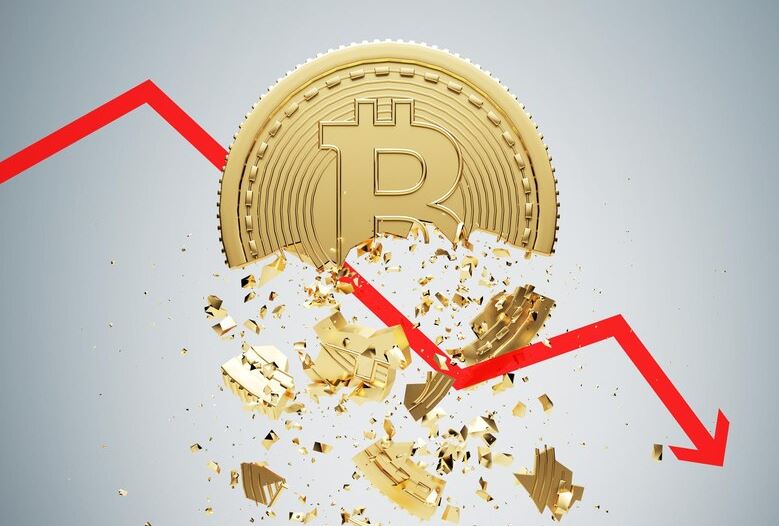
Bitcoin has entered a corrective phase as geopolitical tensions, uncertainty over the next U.S. Federal Reserve Chair, and shifting regulatory dynamics converge to pressure market sentiment.
According to James Butterfill, Head of Research at CoinShares, the current pullback reflects a combination of short-term shocks and longer-running psychological factors rather than a deterioration in Bitcoin’s structural outlook.
In commentary on market conditions, Butterfill said Bitcoin is “currently in a correction phase driven by multiple factors simultaneously,” with geopolitics and policy uncertainty amplifying volatility across risk assets.
Geopolitical Stress and the Psychology of Corrections
Butterfill pointed to renewed geopolitical stress as a key catalyst for the recent downturn. Developments surrounding Greenland and fresh tariff threats have weighed on investor confidence, echoing the impact of trade tensions with China seen last October.
“Recent geopolitical stress surrounding Greenland and renewed tariff threats, which are similar to the developments with China last October, are weighing on market sentiment,” Butterfill said.
He added that sustained selling pressure from large market participants has compounded the move. This whale-driven activity, combined with fragile sentiment, has dragged prices lower in the short term.
Butterfill also addressed the popular four-year Bitcoin cycle narrative, arguing that while it lacks a strong fundamental basis, it has taken on practical significance.
“While the widely cited four-year cycle theory is not fundamentally convincing, it has become increasingly self-fulfilling and is contributing to the current pullback,” he said.
Looking to history, Butterfill noted that Bitcoin’s reaction to geopolitical shocks often follows a familiar pattern. Events such as the collapse of the yen carry trade or trade-related disputes tend to trigger sharp drawdowns before a period of stabilisation sets in.
“Historically, geopolitical shocks tend to follow a similar pattern,” he said, adding that outcomes ultimately depend on the nature of the event, but that “continued short-term pressure followed by recovery appears likely.”
Takeaway
The Fed Succession Puzzle Weighs on Bitcoin
Beyond geopolitics, Butterfill highlighted uncertainty surrounding the nomination of the next U.S. Federal Reserve Chair as a second major headwind for Bitcoin.
Markets had recently leaned toward Kevin Hassett, a White House adviser, as a potential successor. However, President Donald Trump indicated a preference for Hassett to remain in his current role, prompting a shift in expectations.
As a result, prediction markets such as Polymarket have moved toward Kevin Warsh, a former Fed governor widely viewed as more hawkish and sceptical of rate cuts. Butterfill said this shift is clearly influencing Bitcoin sentiment.
“This expectation is visibly influencing Bitcoin sentiment,” he said.
Butterfill argued, however, that the market’s interpretation may be flawed. In his view, a hawkish Fed Chair would be misaligned with the President’s stated policy objectives.
“In the current environment, Warsh would be poorly aligned with Trump’s repeatedly stated objective of monetary easing this year,” Butterfill said.
He added that “a Fed Chair who would categorically rule out rate cuts does not fit the President’s policy direction,” suggesting that futures and prediction markets may be mispricing the succession outcome.
This disconnect, Butterfill noted, has added to near-term uncertainty, reinforcing risk aversion across crypto markets even as longer-term macro drivers remain unresolved.
Takeaway
Short-Term Volatility Versus Medium-Term Trends
Butterfill stressed that while near-term risks are dominating price action, the broader pattern remains consistent with previous episodes of geopolitical stress.
“In the short term, geopolitical risks and the Fed succession question remain defining drivers for Bitcoin,” he said.
However, he emphasised that medium- to long-term dynamics tell a different story. Historically, periods of heightened uncertainty have increased volatility without undermining Bitcoin’s longer-term adoption or investment case.
“In the medium to long term, however, the familiar pattern persists of geopolitical stress causing volatility but not necessarily structural weakness,” Butterfill said.
This distinction, he argued, is critical for investors assessing whether the current correction represents a cyclical reset or a more durable shift in market direction.
Takeaway
Regulatory Delays Add Another Layer of Uncertainty
On the regulatory front, Butterfill pointed to growing delays around the proposed U.S. “Clarity Act,” which was intended to establish clearer rules for stablecoins.
The bill, initially seen as particularly supportive for Ethereum and the broader digital asset ecosystem, is now facing obstacles in the Senate Banking Committee.
“Delays to the ‘Clarity Act’ are becoming increasingly apparent,” Butterfill said.
He explained that the legislation is currently being blocked due to disputes over rewards paid to stablecoin holders, a development that risks diluting the bill’s original intent.
“The bill’s original intent risks being diluted by political interests,” Butterfill said.
While the immediate impact has been most relevant for Ethereum-linked use cases, regulatory uncertainty tends to spill over into broader crypto market sentiment, particularly during periods of heightened macro stress.
Takeaway
Bitcoin Caught Between Macro Forces
Butterfill’s assessment paints a picture of Bitcoin caught between multiple macro forces: geopolitical risk, monetary policy uncertainty, and stalled regulation.
While these factors are driving a corrective phase in the short term, CoinShares’ research suggests that such episodes are not uncommon and often prove temporary.
The coming weeks are likely to see continued sensitivity to headlines around global politics and Fed leadership, with prediction markets and futures pricing playing an outsized role in shaping sentiment.
For longer-term investors, Butterfill’s commentary underscores the importance of distinguishing between volatility driven by uncertainty and genuine shifts in Bitcoin’s underlying investment case.