China’s JD.com expands into Europe with Joybuy platform
Chinese e-commerce giant JD.com has launched a new online retail platform in Europe as it accelerates its global expansion strategy and seeks new growth opportunities beyond its fiercely competitive domestic market.
The Beijing-based company on Monday introduced Joybuy, an online shopping platform that will operate across six European markets: the United Kingdom, France, Germany, the Netherlands, Belgium and Luxembourg.
The move places JD.com in direct competition with global e-commerce leader Amazon as well as Chinese rivals expanding rapidly across Western markets.
Why is JD.com expanding into Europe?
Chinese retailers and brands have increasingly looked overseas for growth as weak consumer demand and intense price competition weigh on the domestic market.
JD.com has been actively exploring ways to strengthen its presence in Europe.
Last year, the company agreed to acquire Ceconomy, the owner of electronics chains MediaMarkt and Saturn, in a deal valued at about €2.2 billion.
The launch of Joybuy marks the company’s latest effort to build a broader international retail footprint.
The platform will sell products across categories such as technology, home appliances, beauty, groceries and homeware.
It will also feature dedicated online storefronts for global brands including L’Oréal, Braun, DeLonghi, BRITA and Bodum.
JD.com said products on the platform would be offered at competitive prices as it attempts to attract European consumers.
Joybuy to focus on fast delivery
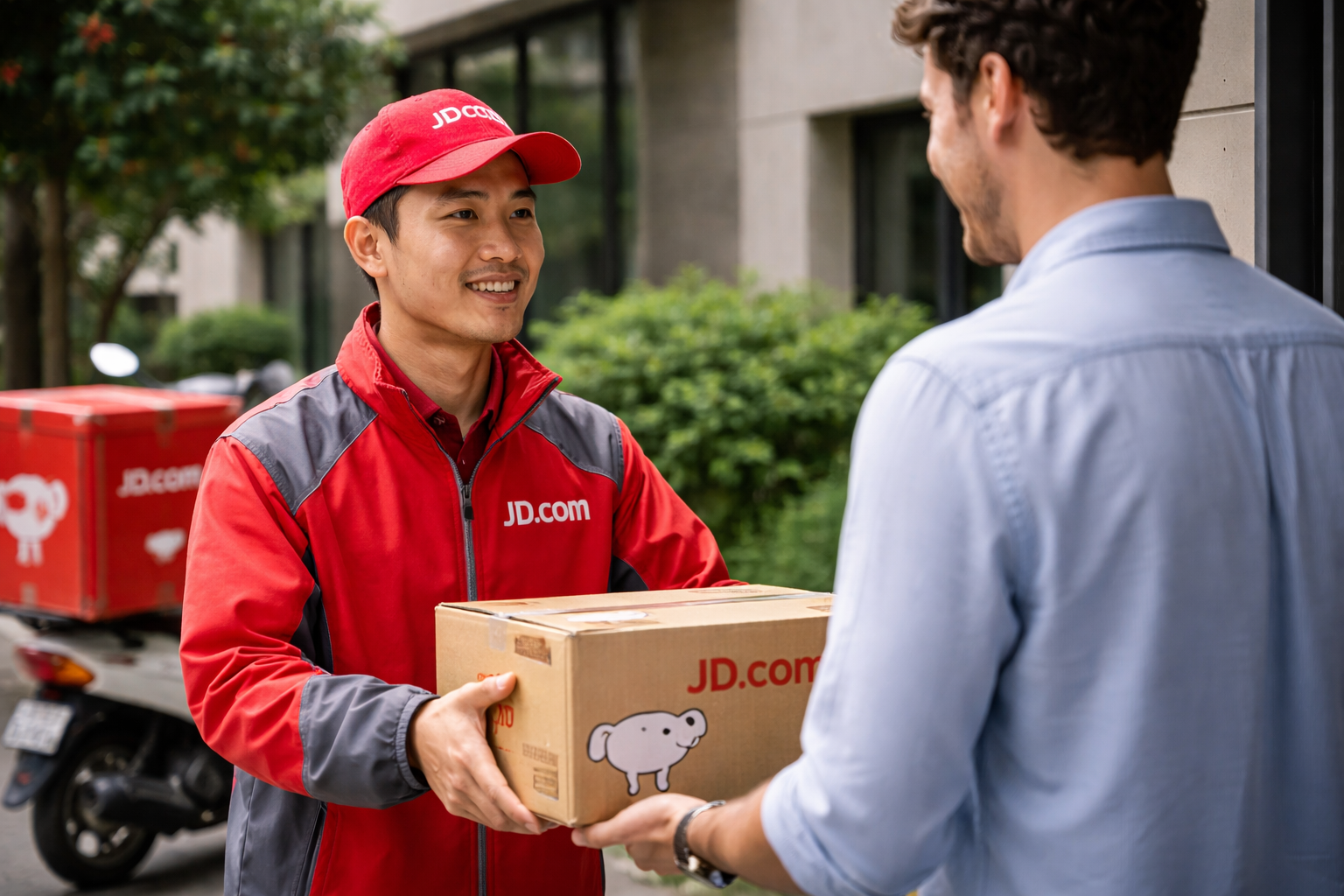
A central pillar of the company’s strategy is fast delivery enabled by its logistics infrastructure.
Matthew Nobbs, managing director of Joybuy UK, said orders placed before 11 am in major cities will arrive the same day, while orders placed before 11 pm are expected to be delivered the following day.
More than 15 million households across Europe and the UK will be covered by same-day delivery at launch.
The platform will also introduce a subscription service called JoyPlus, offering unlimited free deliveries for a monthly fee of €3.99 or £3.99, positioning it as a competitor to Amazon’s Prime membership.
Standard delivery will be free for orders above €29 or £29.
JD.com’s logistics-heavy model differs from many rival Chinese platforms operating internationally.
Competing with established rivals like AliExpress, Temu
While platforms such as AliExpress and Temu ship products directly from China using an asset-light marketplace model, JD.com relies on local warehouses and its own distribution network to shorten delivery times.
The company said the European expansion includes around 60 warehouses and depots along with its own last-mile delivery service, though it did not disclose the total investment involved.
The model mirrors JD’s approach in China, where its extensive logistics infrastructure has enabled rapid deliveries and helped position the company as a key marketplace for international brands such as Apple.
JD.com had previously explored acquisitions in the UK retail sector as part of its expansion plans.
In 2024, it examined a takeover of electricals retailer Currys but later abandoned the proposal.
The company also held discussions with Sainsbury’s about acquiring its Argos business, though those talks did not result in a deal.
Industry observers say JD.com is entering a crowded European market that already includes dominant players like Amazon alongside fast-growing Chinese platforms.
Joybuy, however, is attempting to differentiate itself by acting as a first-party retailer that owns much of the inventory it sells rather than relying primarily on third-party merchants.
“We’re a first-party retailer and that makes us very different from other platforms,” Nobbs said in an interview with CNBC, adding that the company’s focus is on directly working with brands rather than shipping low-value goods under “de minimis” import rules.
As Chinese e-commerce companies expand globally, JD.com is betting that its logistics-driven retail model can help it gain ground in one of the world’s most competitive online shopping markets.
The post China's JD.com expands into Europe with Joybuy platform appeared first on Invezz