Mexico inflation tops 4% in February as food prices climb
According to the National Consumer Price Index (INPC) released by the National Institute of Statistics and Geography (INEGI), Mexico’s annual inflation rate exceeded the 4% mark in February due to rising food costs and continued underlying pressure in services.
INEGI reported that the INPC increased by 0.50% from the previous month to reach 144.307 in February 2026.
This resulted in an annual inflation rate of 4.02%, slightly higher than the 3.77% recorded in February 2025.
The INPC is Mexico’s primary benchmark for monitoring inflation trends, measuring the average change over time in the prices of goods and services consumed by households nationwide.
Although some energy and agricultural products recorded declines, the latest data show that price pressures remain across key consumption categories, particularly food and prepared meals.
Core inflation is still high
A closer examination of the data shows that core inflation, which excludes volatile items and prices not directly influenced by market forces, continued to rise gradually.
The core price index increased by 0.46% month over month in February, indicating ongoing inflation in goods and services linked to domestic demand.
Stronger pricing dynamics in labour-intensive sectors such as restaurants and hospitality were reflected in a 0.39% increase in goods prices and a 0.52% increase in services prices within the core component.
The core index rose by 4.50% year on year, significantly higher than the 3.65% annual increase recorded in the same month in 2025.
This rise suggests that inflationary pressures in Mexico are increasingly concentrated in structural categories such as services, rather than only in volatile food or energy products.
Because core inflation removes short-term fluctuations in items such as fresh food and energy, economists often view it as a more accurate measure of medium-term price trends.
Food volatility drives non-core prices
Meanwhile, non-core inflation, which includes more volatile components such as agricultural products and government-regulated energy prices, rose by 0.64% month over month in February.
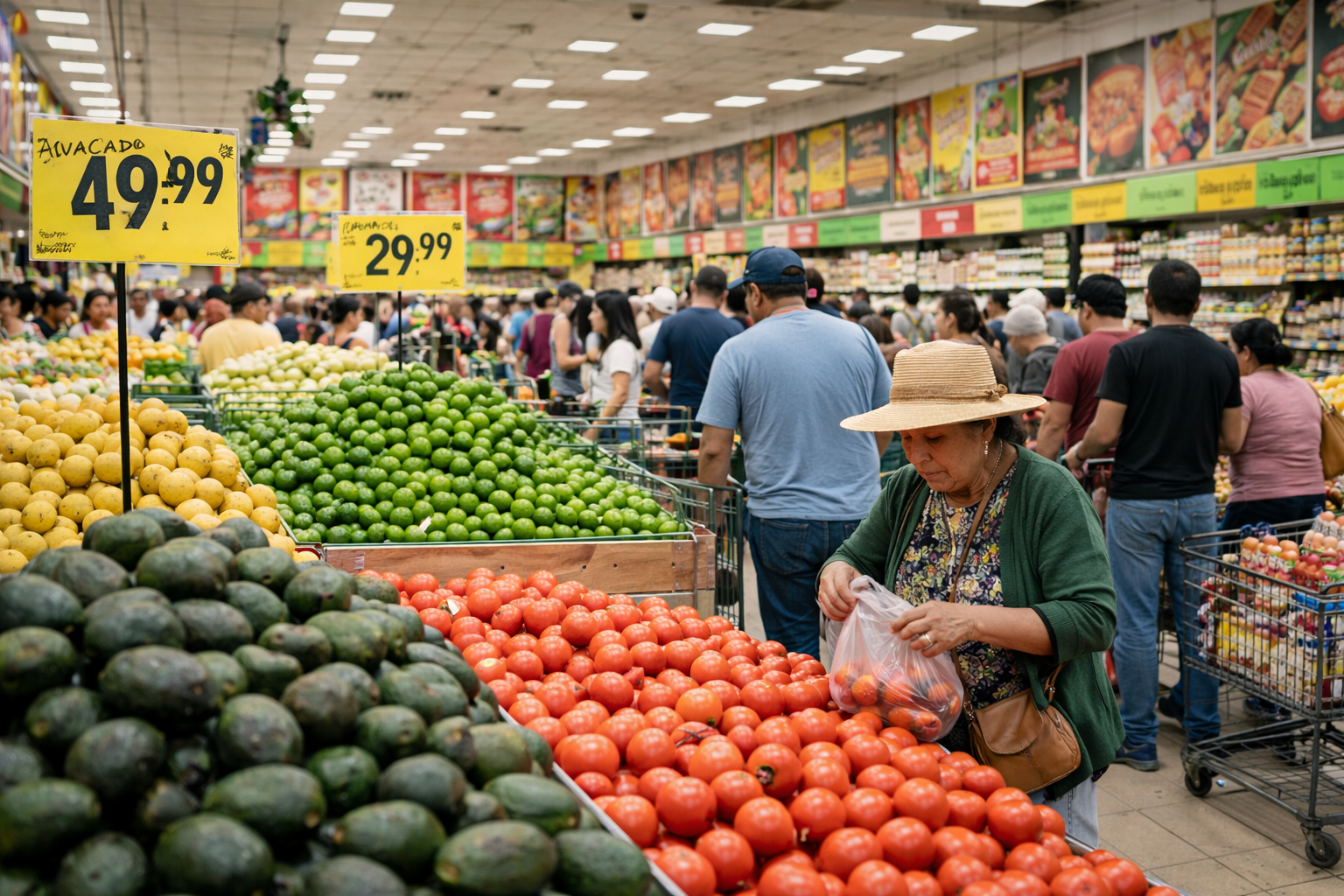
Fresh food recorded the largest increase within this category. Prices for fruits and vegetables rose by 4.94% compared with the previous month, contributing significantly to the overall rise in consumer costs.
In contrast, government-regulated tariffs and energy prices increased by only 0.02%, indicating that fuel and electricity costs remained relatively stable during the period.
On an annual basis, non-core inflation stood at 2.44%, lower than the 4.08% recorded in February 2025.
This indicates that, despite monthly volatility, price pressures in these volatile categories have eased over the past year.
Among the main drivers are food and restaurants
INEGI also identified several goods and services that had the greatest influence on inflation in February.
The largest contributors to price increases were tomatoes (jitomate) and potatoes and other tubers, both of which recorded noticeable price rises during the month.
Small eateries and casual dining establishments, including loncherías, fondas, torterías, and taquerías, also experienced price increases as operating costs in the food service industry rose.
These items carry significant weight in the country’s consumer basket because many households purchase them daily.
At the same time, certain products helped reduce inflation.
Prices for liquefied petroleum gas (LP gas), commonly used in Mexican households for cooking and heating, declined during the month.
Prices for eggs and chicken also fell, partially offsetting increases in other food categories.
The post Mexico inflation tops 4% in February as food prices climb appeared first on Invezz